Bitcoin can't be both valuable enough AND stable enough to replace gold. And it's not even the main challenge.
1. A reserve asset must be stable.
Global gold reserves: 35 000 tons worth €3 trillion. At today's valuation, we'd need 40 million BTC to match this value, nearly twice the arbitrary (yet modifiable) cap of 21 million Bitcoin. If compared to all gold on Earth, which is a fair comparison, we'd need 200 to 300 million Bitcoin. For Bitcoin to match gold's value, its price must multiply 2 to 15 times. With no tangible underlying value, BTC can only grow through speculation. Bitcoin's Catch-22: Stable Bitcoin loses appeal; volatile Bitcoin fails as a reserve.
2. An asset must be widely accepted to become de facto a reserve.
Until the vast majority of countries, in particular the largest economies, agree on a common asset, this asset will not be a reserve. Bitcoin is not a candidate for reserve asset in countries with currency instability. It is an escape mechanism for individuals, much like the black-market dollar. And there is zero incentive for any strong monetary authority to trade its currency for an asset outside its control. Only naive voters can believe otherwise.
3. I'm a tech geek : tech is not always the answer.
At least when it comes to reserve assets.
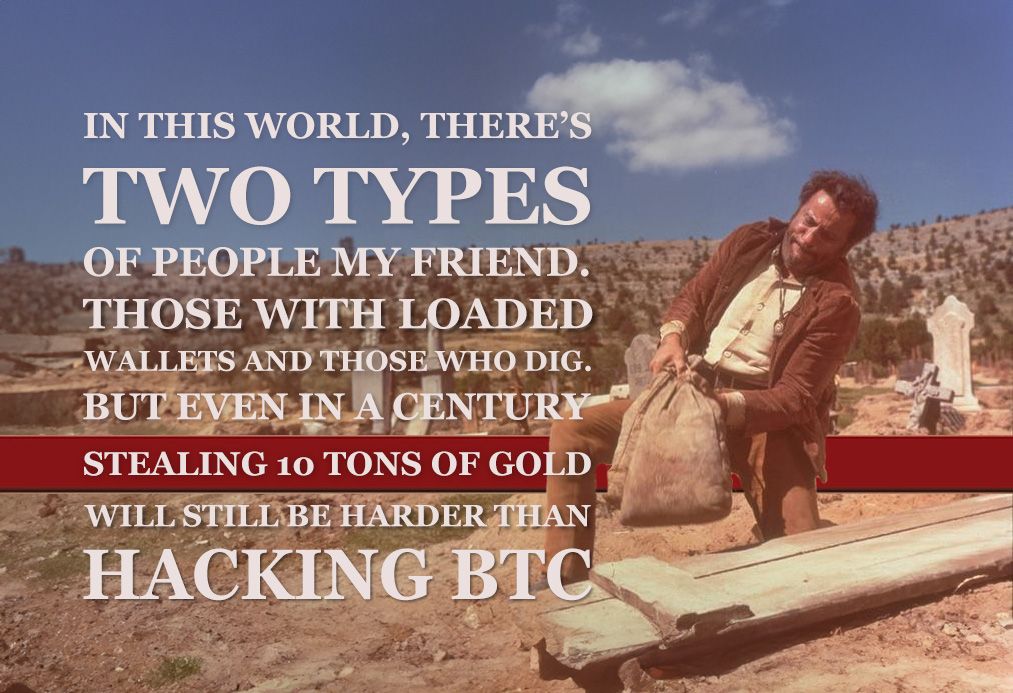
A reserve asset cannot be a trendy yet obscure experiment. Technology evolves fast. Bitcoin is already obsolete. Although BTC’s security relies on reward-based participation, there is no clear plan for how these rewards will evolve. Without strong incentives, the system itself is at risk. Not to mention that stealing 10 tons of gold will always be harder than hacking a crypto (cold) wallet, regardless of future security advances. Some things shouldn’t be digital.
Bitcoin may be a (useful) financial asset, but as a reserve currency for sovereign economies, it's a non-starter.